
Beyond the brink: How three African scientists are building the tools to counter ecological collapse
As the Oppenheimer Research Conference prepares to present Africa’s richest research grants, this story dives deep into how the three finalists are harnessing cutting-edge tools to secure the continent’s natural heritage for future generations.
By Roving Reporters
On the face of it, the three young African scientists competing for the Jennifer Ward Oppenheimer research grant couldn’t have picked more different fields of study. One focuses on marine fish, another on insect pollinators, and the third on freshwater ecosystems. Yet their work is bound by a common purpose: using science and technology not just to study ecological collapse, but to prevent it.
Counting fish
If shooting fish in a barrel is the epitome of ridiculously simple tasks, what of counting them in the wide-open ocean?
Kenyan marine biologist Dr Levy Otwoma will tell you it’s demanding work. Vital too.
As he explains it, fish are an important food source for about 200 million coastal Africans, and counting stocks is essential if the declining resource is to be properly managed.
Yet, the tools scientists traditionally rely on for counting, or rather estimating, fish species diversity and population dynamics, can be hard to apply and are not always especially accurate.
Fish, as Otwoma reminded guests at the 34th Oppenheimer Generations Research and Conservation Tipping Points webinar, swim about. They cross international boundaries; they leave protected areas. And even when they do stay put in a particular country or region, reliable counts may prove elusive.
Consider cryptobenthic fish. These reef- or bottom-dwellers, less than 50mm in length, can be devilishly tricky for census divers, or more often, underwater visual sensors, to detect, as the “crypto” part of their name suggests. The little fish blend into the background. This leads to underestimates of species that are critical to “biomass production in the marine environment” and this at a time when stocks are increasingly threatened by overexploitation, climate change and habitat destruction.
Otwoma, a senior research scientist at the Kenya Marine and Fisheries Research Institute, noted that other traditional census methods, like trawling, damage ecosystems and kill the very fish researchers seek to count.
Then there is the dearth of taxonomic skills on the continent — the deep knowledge required to classify fish — upon which traditional monitoring methods depend.
Techniques that identify the presence of different, often tiny fish from genetic traces in seawater samples can provide far more accurate population estimates, but have yet to catch on in Africa. This is because of the lack of local labs and, as a consequence, the costs and logistics that come with sending samples abroad for analysis. All of which can have a chilling effect on collaboration.
Otwoma recalled how, while working on his own PhD, he waited more than a year to obtain the necessary permits to export samples.
But this is changing with the advent of relatively inexpensive portable DNA sequencing machines, like the Oxford Nanopore MinION, which even allow researchers to analyse samples in the field.
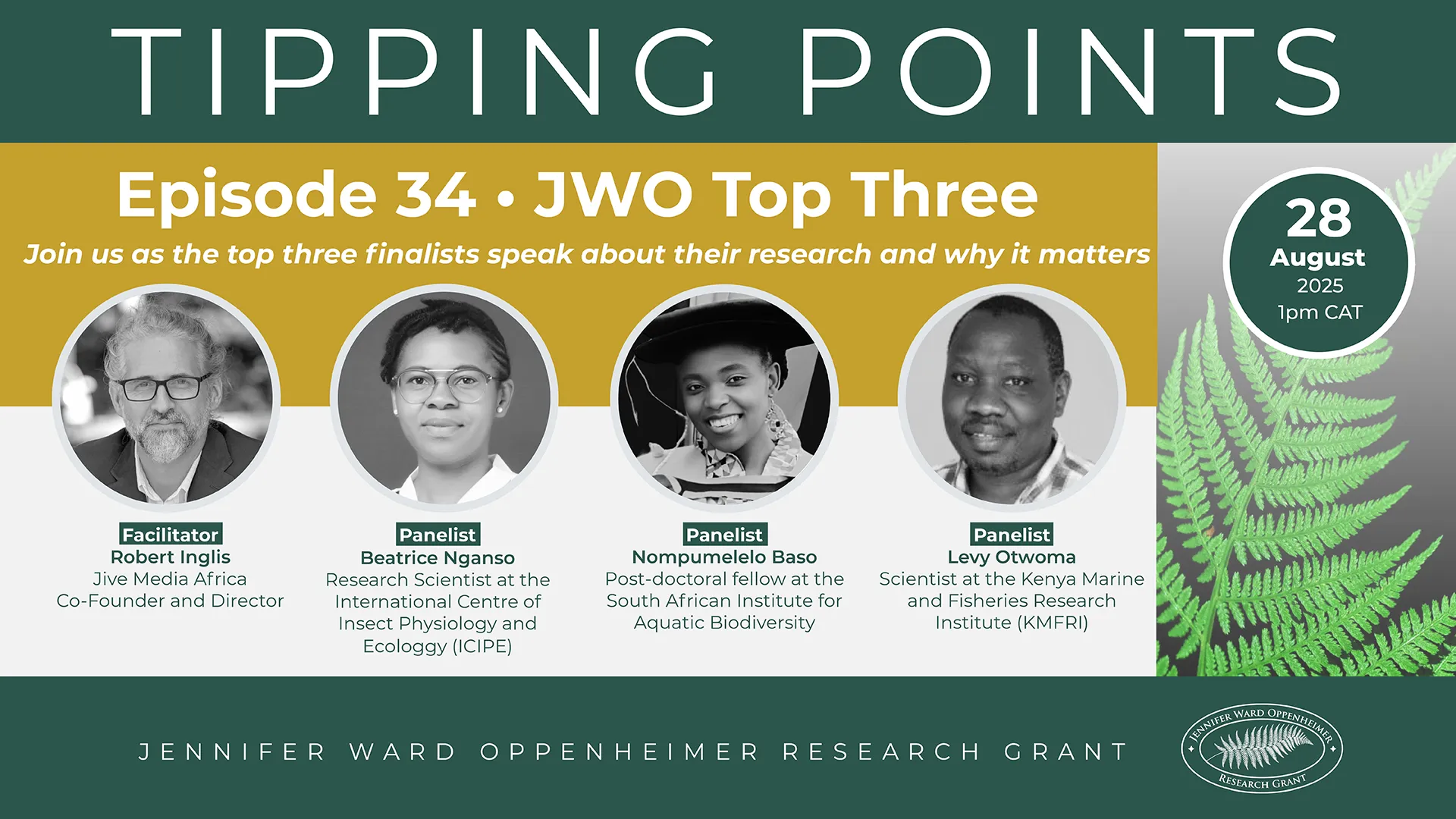
A transdisciplinary project that proposes using such eDNA machines, and will involve standardizing protocols, developing a comprehensive reference database, training researchers, fostering networking among them, and encouraging publication of research, was the subject of a presentation by Otwoma at the 28 August webinar.
He is one of three finalists, competing for the annual Jennifer Ward Oppenheimer Research Grant, which supports early-career scientists in Africa whose work is linked to biodiversity and conservation. With USD $150,000 going to the winning proposal, the grant is the among the richest of its kind on the continent and this year attracted 848 applicants from 41 countries.
“The solution that I’m providing is to try to empower African nations to monitor marine fish biodiversity… (to) strengthen data-driven, sustainable management on the continent,” said Otwoma.
Policy shift
At present, policymakers “really do not use” research data to develop policy, he said. So, his project would use forums, workshops and questionnaires to understand why this was so and to attempt to change things, he said.
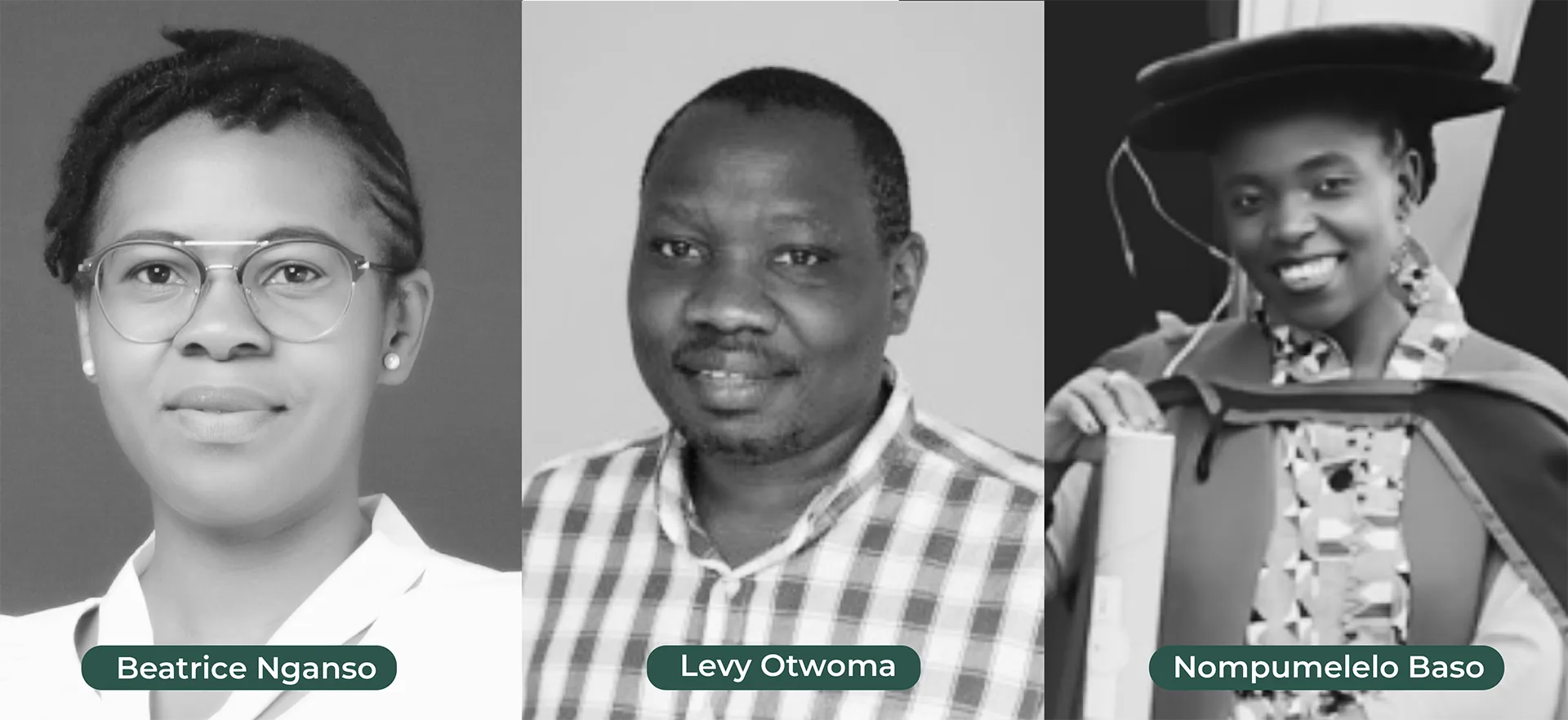
Joining Otwoma at the webinar were fellow finalists, Dr Beatrice Nganso, also of Kenya, and South African, Dr Nompumelelo Basome. Nganso and Basome’s areas of interest — insect pollinators and freshwater ecological systems, respectively — are very different from each other (and Otwoma’s). But all three are proposing projects that seek to harness technology and to build networks to help African researchers better exchange knowledge on subjects vital to the wellbeing of the continent.
Power of pollinators
If she wins, Nganso aims to develop an open-access database where researchers, policymakers, entrepreneurs, communities, and young people can document, model, and share findings on how insect plant-pollinators interact.
It will deal with how and where pollinators — bees and other bugs — do their work, and in relation to each other, as well as the effects upon them of alien invasive species and climate change.
It’s an area of study where Africa lags much of the world.
“We know very little about their identity, their distribution, and even the forage plants that support their health and productivity,” said Nganso, a researcher at the International Centre of Insect Physiology and Ecology. Bugs are little, but this is a big problem because plant-insect pollinator networks really matter. They support 650 million farmers and a growing human population on the continent, provide income opportunities for beekeeping, boost soil and air quality, and benefit animals, both wild and domestic.
Flying blind
They are, as Nganso put it, the “engine of Africa’s food production system, ecosystem, economics and biodiversity”. And in the absence of robust, publically available data, “we are flying blind”, she said, frustrating efforts to design effective biodiversity and food security policies.
Her proposed continent-wide platform would host more than 300,000 plant-insect interaction records, layered with environmental data and predictive modeling. Geographic information system-based climate and land-use maps and species distribution models will assist with monitoring pollination systems at a continental level under environmental change.
Nganso envisages 11 African institutions contributing existing datasets and that new data collection would focus on West Africa, including Burkina Faso and the Ivory Coast. She is interested in Kenya too because of the many invasive plant species proliferating in protected areas.
Nganso stressed the collaborative, interdisciplinary and capacity-building qualities of her project. It would assemble a team with partners across regions and countries with expertise in entomology, mathematical and simulation modeling, computer programming and biodiversity.
Freshwater futures
Like Nganso, Baso’s project also has a focus on invasive species and climate change, but as these stressors apply to freshwater plants and ecosystems.
Her goal is to develop models that identify and predict ecological tipping points — events that would trigger undesirable permanent change. Action could then be taken to head these off, protecting aquatic systems and the human livelihoods that depend on them.
She felt that a lot of research, understandably, separated the different problems because they were “very challenging to work”. But an integrated approach was urgently required.
“We’re already struggling with polluted waters, so the addition of climate change will then proliferate or give an advantage to invasive species even more,” said Baso, who has completed a PhD in botany and is now a postdoctoral fellow at the South African Institute for Aquatic Biodiversity.
Her project will seek to trace the cascade of ecological effects that invasive plant species cause, with a focus on trophic interactions. In other words, who eats what at the different levels in an ecological pyramid.
Baso wanted to know what would happen to the different life forms in freshwater ecosystems when the primary producers (plant life) are simplified, leaving perhaps one producer, the invasive species.
Ripple effects
“You’d assume that in the food web, the associated species, the primary consumers, will be simplified as well,” she said, sketching out a series of consequences that would ripple out. “Let’s say there’s a native plant species that is directly correlated with a specific fish. If that native plant is out-competed, then you also lose that associated fish… and that leads to direct effects on human livelihoods.”
Her proposed solution is a transdisciplinary project blending fieldwork, data modeling, and real-world application. She envisages the development of a dashboard-based tool that would inform policymakers, land managers, and scientists of the consequences of a particular intervention, while also anticipating the effects of climate change.
“This has the potential to not just solve an African problem, because we know that invasive species and climate change are a global (problem). But I’d love for us to be the first ones to come to the table with solutions instead of always being the ones who are left behind,” said Baso.
The winner of the Jennifer Ward Oppenheimer Research Grant will be announced at the annual Oppenheimer Research Conference, which takes place from October 15-17 in Johannesburg.

