
Contact
Email: info@jivemedia.co.za
Address: Jive Hub, 279 Boddington Estate, Nottingham Road, 3280

Read More
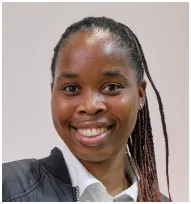
Londeka Dube is researching new ways to make water safer for communities affected by pollution and water scarcity.
A master’s student at the University of South Africa, Londeka specialises in nanomaterials for water treatment. Her research focuses on combining porphyrins with bimetallic nanoparticles to develop light-activated materials that can inactivate harmful bacteria in water. She also uses plants in green synthesis, exploring more sustainable approaches to water treatment.
Her interest in water and public health has already led to a published book chapter examining water contamination and the health impacts of waterborne bacteria.
Beyond the laboratory, Londeka is passionate about science communication and making complex research easier to understand. She hopes to connect advanced nanotechnology with the everyday realities of communities affected by water contamination, while building trust in new technologies and inspiring young scientists to see research as a tool for social change.

Read More
Resilient farming is in high demand as climate change, unpredictable rainfall and pressure on food production challenge farmers around the world. Rebecca Mantso is investigating how growing maize and beans together could offer one practical solution.
An Agricultural Scientist and MSc Agronomy researcher at North-West University, Rebecca researches maize–dry bean intercropping and its potential to improve soil health, nutrient use and carbon storage while reducing greenhouse gas emissions. Her work is particularly relevant to farmers in South Africa’s North West Province, where variable rainfall and increasing climate pressures are already being felt.
Rebecca’s journey extends beyond the field and laboratory into science communication, governance, leadership and community development. She is passionate about making science accessible and inspiring young people to pursue STEM careers.
She hopes to connect researchers, farmers, policymakers and communities, turning scientific knowledge into practical ideas for productive, climate-smart agriculture.

Read More
Prostate cancer is one of the major health challenges facing men, but access to essential medicines can be complicated by shortages and delays, particularly in Africa. Dane Damons is exploring how chemistry and automation could help address this challenge.
An MSc Chemistry student at Nelson Mandela University, Dane specialises in Continuous Flow Chemistry. His research focuses on developing an automated continuous-flow method for producing enzalutamide, a medicine used to treat prostate cancer. By exploring faster, more efficient and potentially on-demand production, his work could contribute to making essential medicines more accessible and responsive to patients’ needs.
Dane is passionate about making complex science easier to understand and showing how chemistry can tackle real-world problems. He hopes to use science communication through public talks, educational programmes and community outreach to connect his research with the people it could ultimately benefit, while inspiring more young people to pursue careers in science.
Read More
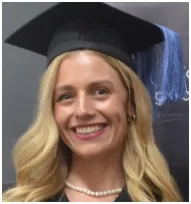
Breast cancer treatment can be a difficult balancing act: the medicine needs to destroy cancer cells without damaging too many healthy ones. Lauren Johnston is researching how nanotechnology could make that treatment more precise.
A PhD Nanomedicine candidate at the DSTI-NMU Nanomedicine Platform, Lauren specialises in nanotechnology and drug delivery. Her research focuses on developing tiny drug carriers called liposomes, designed to deliver cancer drugs directly to breast cancer cells while limiting their exposure to healthy cells. She is particularly interested in triple-negative breast cancer, a difficult-to-treat subtype with fewer treatment options.
Her work uses pH-sensitive liposomes that respond to the more acidic environment of tumours and release their drug payload where it is needed.
For Lauren, the excitement lies in the possibility that something microscopic could make a major difference to patients’ lives. She is passionate about science communication and making research accessible beyond the laboratory, while inspiring more people to see science as something they can understand and be part of.
Read More
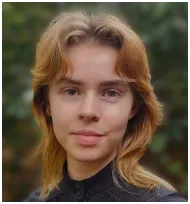
Some cancers may start with something much smaller than a tumour: a microbe. Kaela Kokkas is using artificial intelligence to investigate which bacteria and viruses could be linked to cancer.
An MBBCh-PhD student at the University of the Witwatersrand, Kaela is conducting her research at IDORI, where infectious diseases and cancer intersect. Using AI and computational methods, she and her team are identifying and prioritising the most promising microbe–cancer relationships for further research.
The goal is to help researchers focus their time and resources on the connections most likely to lead to new discoveries, and potentially shift some of the focus in cancer research from treatment towards prevention. We already know that preventing certain infections, such as HPV, can prevent cancer. Identifying other cancer-causing infections could open new possibilities for prevention.
Kaela is passionate about making science engaging and accessible. She hopes to use science communication to help people understand how infections, cancer and prevention are connected, while showing that science can be both fascinating and fun.

Read More
Umvuthuza, an indigenous South African plant, could hold clues to new ways of fighting drug-resistant tuberculosis. Malwande Deon Baleka is investigating whether it could help the body fight the disease.
An MSc candidate in Physiological Sciences at Walter Sisulu University, Malwande researches Sanicula elata (Umvuthuza), exploring its bioactive compounds, antimicrobial activity and effects on macrophages, the immune cells that help clear infections.
His work focuses on host-directed therapy, an approach that strengthens the body’s own immune response rather than targeting TB bacteria directly. By investigating a plant with roots in traditional medicine, Malwande hopes to help bridge indigenous knowledge and modern medicine, while contributing to the search for affordable and accessible treatments for drug-resistant TB.
He is passionate about making science accessible and connecting researchers, traditional knowledge holders and communities. As an academic tutor, he also hopes to inspire young people to see curiosity as the starting point for scientific discovery.
Read More
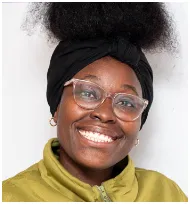
Plastic can take years to break down, but Judith Bulambo is exploring whether nature could help us tackle the problem.
A Biotechnology Master’s student at Durban University of Technology, Judith researches how enzymes can break down plastics that are difficult to degrade, exploring biological approaches to managing one of the world’s growing environmental challenges. Her work could contribute to more sustainable ways of managing plastic waste and moving towards a circular economy.
For Judith, the research is about more than breaking down plastic. It is about rethinking what we consider waste and finding ways for science to work with nature rather than against it.
Beyond academia, Judith is an environmental activist involved in youth engagement, environmental education and community initiatives focused on waste management. She is passionate about making science accessible and turning knowledge into action. Through science communication, she hopes to help communities understand environmental challenges, make informed choices and see themselves as part of the solution.
Read More
Somewhere beyond our Solar System, cold stars and Jupiter-sized planets are revealing new clues about how worlds form and evolve. Mikaela Webber is looking for them.
A PhD candidate in Computer Science at Stellenbosch University, Mikaela uses radio astronomy to investigate some of the coldest and most unusual objects in our cosmic neighbourhood. Her research focuses on finding cold stars and Jupiter-type exoplanets and understanding how their magnetic fields shape their evolution.
For Mikaela, the excitement of research lies in discovery — and in the possibility of finding something new, no matter how far away it may be. She believes science does not always need an immediate practical application to have value; sometimes, curiosity and the desire to understand our Universe are reason enough.
With South Africa’s exceptionally dark and clear skies providing a powerful resource for astronomy, Mikaela hopes to use science communication to inspire young people to look up, stay curious and see the Universe as a place of possibility and discovery.

Read More
From hip and knee replacements to cardiovascular stents, biomedical implants can transform lives. Dr Nthabiseng Moshokoa is developing smarter materials to make these medical technologies possible.
A scientist from Ga-Ramokgopa village in Limpopo and a University of Johannesburg graduate, Nthabiseng has spent nine years in research and now focuses on designing titanium-based alloys for biomedical implants. She uses artificial intelligence and computational materials science, alongside 3D printing and advanced testing, to develop and evaluate new materials.
Her fascination with solving problems extends beyond the laboratory. A fan of investigative shows such as Grey’s Anatomy and How to Get Away with Murder, Nthabiseng enjoys watching characters piece together clues and solve complex problems — an approach she finds useful when tackling challenges in her own research.
She is passionate about making science accessible, particularly in her community, and wants to explain biomedical research in simple, relatable ways. For Nthabiseng, science communication means being able to have a conversation about science with anyone — even her mother.

Read More
Kawela Mumba’s HPV and cervical cancer challenge cannot be solved in a laboratory. The vaccine exists. The challenge is communicating its value well enough for families to trust it.
A medical doctor trained in Algiers, Kawela spent five years in clinical practice before moving into research. She now co-leads clinical trials at the Center for Family Health Research in Zambia, where she studies why adolescent girls and their families may refuse the HPV vaccine, despite its ability to prevent most cervical cancers. Kawela is also a Pex Fellow with the Berlin School of Public Engagement and Open Science.
Working with girls and their mothers in Ndola, Kawela is exploring how information, relationships and trust shape vaccination decisions. Her research looks at where people get their information, who they trust and what makes them confident enough to act on health advice.
For Kawela, communication is not a side interest — it is part of the intervention. She wants to take research into the spaces where these conversations happen, from households and churches to WhatsApp groups, helping scientists meet communities where they are.

Read More
Avocado seeds could become more than kitchen waste. Keno Mosoane is investigating their potential to help remove antibiotic resistance genes from wastewater.
Keno’s interest in water treatment began at the University of Limpopo, where he researched using sugar to remove water contaminants. An exchange of knowledge with the University of Amsterdam deepened his interest in water microbiology, while a lecturer introduced him to emerging contaminants and the potential of natural materials for removing them.
His current research explores how avocado seeds, an agricultural waste product, can be turned into a natural material for treating wastewater. The work could also inspire communities to see everyday waste differently and explore simple, locally available approaches to water treatment.
For Keno, science should not stop at the laboratory. He is passionate about communicating research in ways that people can understand, particularly those experiencing the problems researchers are trying to solve. He believes even complex science can be turned into simple, accessible communication.
Read More
Cancer treatment can be expensive and difficult to access, while many African communities already turn to traditional plants for healing. Vitalis Mbayo is using computational chemistry to investigate what these plants may actually be capable of.
A PhD candidate in Computational Chemistry and Molecular Modelling at the University of Johannesburg, Vitalis researches plant-derived compounds that could contribute to cancer treatment. His work uses quantum chemistry, molecular docking, chemoinformatics and molecular dynamics simulations to examine how compounds from Annona muricata, commonly known as soursop, interact with proteins involved in cancer-related inflammation.
By simulating these interactions at an atomic level, Vitalis hopes to identify promising compounds more efficiently and provide scientific evidence for traditional medicinal knowledge. His work could ultimately contribute to more affordable and accessible cancer therapies.
With experience in pharmacovigilance and STEM mentorship, Vitalis sees science communication as essential to turning research into impact. He wants to help communities distinguish promising natural medicines from misinformation, while showing young Africans how advanced science can address problems close to home.

Read More
Wetlands regulate water, reduce flooding and support biodiversity and local livelihoods, but they are under growing pressure from development and a changing climate. Yanga Dzanibe is using technology to understand what is happening to these vital ecosystems.
A researcher at Walter Sisulu University, Yanga uses Geographic Information Systems (GIS) and Remote Sensing to track how wetlands are changing over time and identify what is driving those changes. His research focuses on communities in uMzimkhulu Local Municipality, where settlement expansion, land-use changes and climate variability are placing pressure on wetland resources.
By identifying vulnerable areas, his work can help communities, planners and local government make better decisions about wetland management and climate-resilient development.
For Yanga, science should reach beyond academic institutions. Through community engagements, educational programmes, workshops and digital platforms, he wants to make environmental research accessible and useful to the people it affects, while inspiring young people to see science as a tool for solving real-world problems.

Read More
The metals we rely on every day come with a carbon cost. Dr Madinoge Mampuru is investigating how hydrogen could help make metal production cleaner and more sustainable.
A Metallurgical Research Engineer in Mintek’s Pyrometallurgy Division, Madinoge works on innovative processes for producing ferroalloys while reducing their environmental impact. She is particularly interested in using hydrogen to decarbonise pyrometallurgy, the high-temperature processes used to produce metals and alloys.
Her work includes the Horizon Europe HAlMan project, an international collaboration focused on the sustainable and decarbonised production of manganese metal and alloys. Working with local manganese producers and international research partners, Madinoge takes ideas beyond the conceptual stage, demonstrating new processes at laboratory and pilot scale and gathering industry feedback along the way.
For Madinoge, science is about understanding how the world works and then using that knowledge to create something better. She hopes to share her work through social media and school and university outreach, helping more people understand the science behind the industries that shape everyday life.

Read More
Children should not have to adapt to medicines designed for adults. This is the problem Mpho Kotlolo is trying to solve.
A PhD candidate in Pharmaceutical Sciences at Tshwane University of Technology, Mpho has a background in Analytical Chemistry and Pharmaceutical Sciences. Her research focuses on developing child-friendly antiretroviral medicines for children living with HIV. She is developing a palatable, rapidly dissolving fixed-dose combination that does not require water and addresses challenges such as swallowing large tablets, unpleasant tastes and inaccurate tablet splitting.
Through her venture, PharmaKids, Mpho hopes to translate her research into accessible pharmaceutical products and advance health equity across Africa, particularly in resource-limited communities.
For Mpho, science communication is part of turning research into impact. She wants to make complex pharmaceutical research accessible to communities, healthcare professionals and policymakers, while using communication to build partnerships, attract investment and advocate for better access to child-friendly medicines.

Read More
A young person does not have to sit across from a researcher to tell their story. Aggrey Mokaya uses theatre to make sure their voice is heard.
A mental health researcher at the Africa Health Research Institute, Aggrey uses interactive theatre and community dialogue to involve young people in shaping mental health research. Instead of treating participants as passive subjects, his work gives them space to explore distress, stigma and support needs through performance and storytelling, particularly in communities in KwaZulu-Natal where access to mental health services can be limited.
His research also explores digital and AI-enabled mental health interventions, ensuring that people with lived experience help define what safety should look like as these technologies enter mental health care.
For Aggrey, communication is not something that happens after the research. It is part of the research itself. He wants to keep using performance, dialogue and accessible storytelling to give communities a meaningful role in shaping the science that affects them — and to ensure their experiences have a place in conversations about the future of mental health.

Read More
S’phamandla Msomi’s research could make life easier for farmers like his grandmother while giving waste a second life.
Growing up, S’phamandla spent planting seasons alongside his grandmother in her maize garden, where she taught him to count before he went to school. That early love of learning eventually led him to Applied Science in Biotechnology and postgraduate studies in Agricultural Biotechnology.
His research uses natural polymers made from shrimp shell waste to encapsulate plant growth-promoting microorganisms. The resulting delivery system is designed to release these beneficial organisms over several months, reducing the need for farmers to repeatedly apply fertiliser while also repurposing waste that would otherwise contribute to environmental pollution.
For S’phamandla, the people who use science should also have a voice in shaping it. He wants to communicate his research in ways that farmers can understand and engage with, creating opportunities for commercial and small-scale farmers to work alongside researchers and help refine solutions that affect their lives.

Read More
Agricultural waste and plastic pollution are two very different problems with one potential solution. Onndindaho Rasilwela is turning crop waste into biodegradable mulch films for more sustainable farming.
A Chemical Engineering graduate and researcher, Onndindaho works with agricultural residues such as maize stalks, sugarcane bagasse and banana peels to develop alternatives to conventional plastic mulch. The films are designed to help farmers conserve water, control weeds and support crop production while eventually breaking down naturally.
Her research is particularly focused on developing affordable, practical solutions for small and medium-scale farmers in South Africa. By transforming agricultural waste into a useful product, the work could reduce waste and plastic pollution while creating value from materials that would otherwise be discarded.
Onndindaho is passionate about making science accessible to young people, farmers and communities. She hopes to use science communication to help people understand and apply sustainable solutions, while inspiring young people to see science as a way of solving problems that affect their everyday lives.

Read More
Healthier animals can mean healthier food for people. Shanice Kantuchitani is exploring how natural compounds can improve animal health, production and the quality of the meat we eat.
An MSc researcher in Meat Science at Stellenbosch University, Shanice’s interest in natural solutions began long before her research career. Growing up, her grandparents turned to home-brewed natural remedies whenever she was ill, giving her an early appreciation for the potential of nature.
Today, she investigates natural nutraceuticals that can support animal health and production while improving meat quality. Her work sits at the intersection of animal and human health, with implications for farmers whose livelihoods depend on livestock and consumers who rely on safe, nutritious and accessible protein.
Shanice wants to use social media, public talks and community engagement to make animal science easier to understand. With misinformation about meat and livestock spreading quickly, she believes communicating the “why” behind research can help consumers, farmers and policymakers make better-informed decisions.
Read More
A childhood question about what stars are made of has become Lobone Dire’s scientific pursuit: understanding which stars could host the building blocks for life.
An astronomer at North-West University, Lobone specialises in stellar abundance analysis, studying the chemical composition of stars to identify those with the potential to form planetary systems capable of supporting life. His fascination with the night sky began with his father’s interest in astronomy and grew into a desire to understand our origins and the origins of life itself.
For Lobone, astronomy is as much about sharing wonder as it is about research. He has hosted stargazing sessions for people of all ages and backgrounds, using them to answer questions, spark curiosity and offer career guidance. He hopes to continue raising awareness of astronomy and cosmic events in his community.
Lobone sees science communication as part of a cycle that began with his own curiosity. By sharing what he has learned, he hopes to inspire others to look up, ask questions and discover where their own curiosity might lead.